
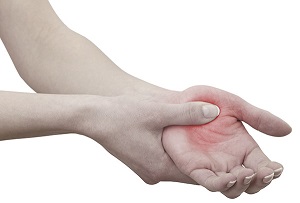
At Aurelium Health, our hand and wrist one-stop clinic provides a comprehensive solution. Patients can expect to find all necessary services in one place, including consultations with consultant hand and wrist surgeons, immediate diagnostic ultrasound and nerve conduction studies, and a range of treatments, including injections. This holistic approach caters to conditions like carpal tunnel syndrome, arthritis, trigger finger and ganglion cysts, ensuring you receive gold standard, coordinated care that addresses your specific needs swiftly and effectively.
Introduction
The hand is made up of the wrist, palm, and fingers and consists of bones, joints, muscles, ligaments, tendons, and many blood vessels and nerves. It is one of the most flexible and useful parts of our body and can suffer injury due to overuse or trauma. The hand can also be affected by certain chronic medical conditions.
Common Hand Injuries and Conditions
Common hand injuries and conditions include:
- Broken finger/fractured hand: A fracture is a break in the bone that occurs when more force than the bearable limit is applied against a bone. A hand fracture can occur in the fingers, thumb, or bones within the palm of the hand.
- Carpal tunnel syndrome: Carpal tunnel syndrome is a condition characterized by numbness or pain in the thumb and first two fingers due to compression of the median nerve at the wrist.
- Osteoarthritis: This is most common type of arthritis (joint inflammation due to cartilage loss). It is caused by wear and tear of the joints usually seen with ageing.
- Rheumatoid arthritis: This is an autoimmune condition which can lead to arthritis in the hands as well as other joints.
- Ganglion cysts: Ganglion cysts are noncancerous lumps that usually form around the tendons or joints of the wrists or hands.
- Hand nerve injuries: Nerve injuries in the hands may be caused by excessive strain, stretching, or a cut.
- Tendinitis: Tendinitis is a condition in which the tendons in the hands become irritated and inflamed due to overuse.
- Trigger finger: This is a common condition in which the sheath through which tendons move becomes irritated or swollen.
- Dupuytren's contracture: A disorder caused by the thickening of the tissues of the palm.
Symptoms
Signs and symptoms of hand injuries include:
- Pain
- Bruising
- Swelling
- Deformity
- Inability to move the fingers
- Warmth around the area of injury
- Tenderness
- Loss of motion
- Weakness
- Numbness
Diagnosis of Hand Injuries and Conditions
Your doctor will review your symptoms and medical history and perform a thorough physical examination to check for range of motion and stability, and any ligament or tendon damage. Blood flow and skin colour are evaluated. The following diagnostic tests may be performed for further evaluation:
- X-rays: During this study, high-energy electromagnetic beams are used to produce images of the bones.
- CT scan: Multiple x-rays are used to produce detailed cross-section images of the hand.
- Electromyography (EMG) and nerve conduction studies to measure nerve impulses and nerve damage.
Treatment for Hand Injuries
Hand injuries may be treated by resting the hand, medications, bracing, heat or ice application, compression, stretching and strengthening exercises, and by treating the underlying cause or condition. Some of the most common procedures used for the treatment of hand conditions and injuries include:
- Skin grafts: This involves the use of healthy skin from an area of the patient's body to cover or resurface the injured area. This is most commonly used for burn reconstruction and amputation of fingers.
- Tendon repair: This is performed with special sutures for the management of ruptured tendons caused by trauma or sports injury. Surgery performed within 24 hours of the injury is associated with better outcomes.
- Nerve repair: This is a complex surgery performed immediately after a nerve injury, as damage to any of the three main nerves of the hand may lead to limited use or compromised range of motion of the hand, fingers, and wrist.
- Open reduction and internal fixation (ORIF): This is treatment for fractures with completely displaced and/or crushed bones. It involves the realignment of the bones of the hand with the help of rods, wires, splints, and casts.
- Joint replacement: This involves the replacement of the joints in the fingers and the wrist with a new joint made of silicone rubber, a portion of the patient's own tendon, or a plastic or metal implant. This is usually performed in patients with osteoarthritis or traumatic arthritis of the hand to relieve pain and restore function.
Anatomy of the Wrist
The wrist is comprised of small bones called the carpal bones which articulate or connect with each other and with the two long bones in the forearm: the radius and the ulna. The bones meet to form multiple large and small joints. There are several ligaments holding the bones together and tendons which attach muscle to bone. Nerves that enable hand movements and sensation pass through the wrist. Any of these structures can suffer injury due to overuse or trauma. The wrist may also develop certain conditions such as the growth of a mass.
Common Wrist Injuries and Conditions
Wrist injuries commonly occur due to falls or certain sports and activities that involve repetitive use or excessive stress or strain on the wrists. These include gymnastics, basketball, working on an assembly line, or typing. Some wrist conditions have no clear cause.
Common wrist injuries and conditions include:
- Sprains and Strains: These are the most common injuries affecting the wrist. A sprain is an injury to a ligament and a strain refers to a muscle injury. They are caused by excessive forces applied during stretching, twisting, or thrusting.
- Complete ligament injury: This occurs when all the fibres of a ligament are torn, causing pain, swelling, and compromised movement.
- Repetitive Trauma Syndrome: Repetitive movements of the wrist over long periods of time can cause undue stress or pressure on the joints resulting in inflammation, pain, and decreased function in the extremity.
- Fractures: A fracture is a break in the bone which occurs when more force than the bearable limit is applied. This can happen during falls, accidents, and crushing injuries.
- Carpal Tunnel Syndrome: Carpal tunnel syndrome is a condition characterized by numbness or pain in the thumb and first two fingers and occurs when the median nerve is compressed at the wrist. It is a common complaint in individuals who use their hands for prolonged periods of time in an occupation such as computer work.
- Wrist Tendonitis: Tendons in the wrist may get inflamed and irritated due to trauma or repetitive use injuries.
- Osteoarthritis: This is the most common type of arthritis: joint inflammation due to cartilage loss. It is caused by wear and tear of the joints usually seen with ageing.
- Rheumatoid arthritis: An autoimmune condition causing arthritis in the wrist as well as other joints.
- Gout: In this condition, uric acid crystals accumulate in the joints causing arthritis.
- Ganglion Cysts: These are benign masses filled with a jelly-like fluid that can sometimes develop in the wrist joints or tendons.
Symptoms of Wrist Injuries and Conditions
Signs and symptoms depend on the type of wrist injury or condition and may include:
- Pain
- Swelling
- Tenderness and warmth around the injury
- Numbness in the hand
- Feeling a popping or tearing in the wrist
- Bruising
- Loss of motion
- Weakness
Diagnosis of Wrist injuries and Conditions
Your doctor will review your symptoms and medical history and perform a thorough physical examination to assess range of motion, stability of the wrist, and any ligament or tendon damage. Blood flow and skin colour are also evaluated. The following diagnostic tests may be performed for further evaluation:
- X-rays: During this study, high-energy electromagnetic beams are used to produce images of the bones
- CT scan: Multiple x-rays are used to produce detailed cross-section images of the wrist.
- Electromyography (EMG) and nerve conduction studies to measure nerve impulses and nerve damage.
Treatments
Treatments for wrist pain depend on the type of injury or disorder. They can require either nonsurgical or surgical intervention, such as the following:
Nonsurgical treatments:
- Medications: Your doctor may prescribe analgesics and anti-inflammatory medications such as ibuprofen and naproxen to relieve pain and inflammation.
- Icing: Applying an ice pack over a towel on the affected area for several minutes a day may help to relieve pain and swelling.
- Physical Therapy: Strengthening and stretching exercises can help improve range of motion and strengthen the wrist muscles.
- Cortisone Injections: Injection of corticosteroid medication directly into the affected wrist can help relieve pain and swelling.
- Casting and splinting: For wrist fractures where bones are not displaced your physician may place your broken wrist in a cast or splint until the bone heals satisfactorily.
- Closed reduction: If the wrist bones are displaced, your doctor will gently manipulate and align the bones properly without the need for surgery. This procedure is called closed reduction and is performed under local anaesthesia to numb the wrist area. Once complete, a cast is applied to hold the bones in place while they heal.
Surgery is recommended to treat severely displaced wrist fractures and is carried out under local or general anaesthesia.
